


Kart minimum weight and ballast: rules, calculation and where to fit the weights

Updated: 3 days ago

Being underweight at the end of a race means losing everything you earned on track. Kart minimum weight is a simple rule, but ballast has to be calculated, fixed and positioned correctly: a badly mounted weight can come off on track or ruin the way the kart handles. Here is how to do it all properly.
In short Minimum weight is measured with the race-ready kart and the driver on board in full gear, as at the finish. If the total is below the class limit, you add ballast. Under the Italian ACI Sport regulations it can only be fixed to the seat and/or chassis, maximum 5 kg per piece, with at least 2 bolts of 8 mm and self-locking nuts. Where you put it changes the setup.
What kart minimum weight is
Every class has a minimum weight that the kart and driver together must meet. It's measured with the race-ready kart and the driver seated, wearing helmet, suit, gloves, boots and rib protector, in the same condition as when crossing the finish line. The figure varies from class to class (for example, in the Italian Rotax MAX Challenge 2026 it is 105 kg in Micro MAX and 115 kg in Mini MAX): always check the regulations of your class and championship. If you don't yet know which class to race in, start from the guide to karting classes.
Weighing usually takes place right after the chequered flag. Anyone under the minimum weight risks exclusion from the results, which is why it's best never to run at the exact limit.

How to calculate kart ballast
• 1. Prepare the kart: race-ready, with every part fitted and the fuel you usually have left at the end of a race.
• 2. Weigh yourself with the kart: sit in it wearing all your racing gear and use the circuit scales.
• 3. Work out the difference: class minimum weight minus measured weight. The result is the ballast to add.
• 4. Keep a margin: during the race fuel is used and tyres lose rubber. A small margin, usually a kilo or two, keeps you safe.
Weigh again every time you change something important: seat, gear, bodywork or the driver.
The rules for fixing ballast
In Italy the ACI Sport technical regulations are clear, and safety comes first. Rules can differ in other countries and series, so always check yours:
• Only on seat and/or chassis: ballast can't be fitted to the floor tray or the bumpers.
• Maximum 5 kg per piece: if you need more weight, use more pieces.
• Solid fixing: each weight must be fixed with at least 2 bolts of 8 mm diameter with self-locking nuts.
• No lead shot or ballast on the driver: lead shot and ballast worn on the driver's clothing aren't allowed.
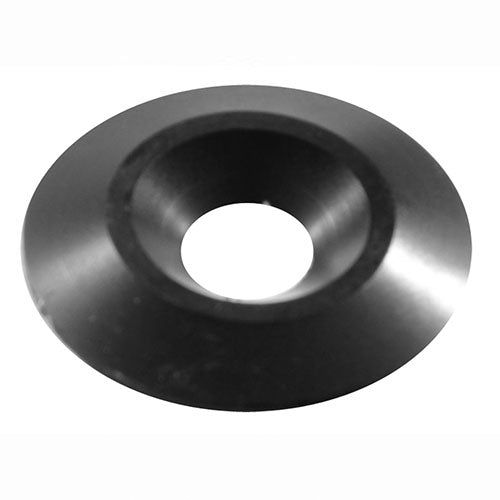
On the seat use wide washers, like the Maranello CIK seat washer 8.5-46x2: they spread the load and reduce the risk of the seat cracking around the holes.

Where to fit the weights: the effect on setup
Where you put the ballast changes the weight distribution and therefore how the kart behaves:
• Lower: you lower the centre of gravity and the kart becomes more stable. On the chassis ballast sits lower than on the seat.
• Further back: you increase the load on the rear wheels and therefore rear grip.
• Higher on the seat: you increase weight transfer in corners and the kart tends to lift the inside wheel more easily.
• Left and right: try to balance the weight between the two sides, because on many karts the engine and driver aren't perfectly centred.
After fitting ballast, check the setup again starting from the kart basic setup. Seat position matters a lot too: you'll find everything in the guide to the seat's effects on setup.
The most common kart minimum weight mistakes
• Running at the exact limit: used fuel and worn tyres take you under weight.
• Normal nuts instead of self-locking ones: vibration loosens them and the weight can come off.
• Not weighing again after a change: a new seat or a different suit changes the total.
• Ballast fitted at random: a weight in the wrong place can change the kart's behaviour more than a setup adjustment.
If you want to start racing for real, also read how to get a karting licence.
Frequently asked questions
Is the driver counted in the kart minimum weight?
Yes. The minimum weight refers to the race-ready kart with the driver on board, wearing all their racing gear: helmet, suit, gloves, boots and rib protector.
Where can ballast be fitted on a kart?
Under the Italian ACI Sport regulations ballast must be fixed only to the seat and/or the chassis, never to the floor tray or the bumpers. Each weight can be at most 5 kg and must be fixed with at least two 8 mm bolts with self-locking nuts.
How much ballast do I need to reach the minimum weight?
Weigh the race-ready kart with the driver in race gear and subtract the result from your class minimum weight. Add a small safety margin, because by the end of the race the fuel used and worn tyres reduce the weight.
Source: ACI Sport National Karting Technical Regulations (art. 4.17) and class regulations.
Questions about this topic?
Message us on WhatsApp: we answer personally, with the experience of people who live at the track. And if you want to drive a real racing kart, with Arrive & Drive you get into one of ours, ready on track. The right spare part? You will find it in the shop.
Arrive & Drive Pro by TKS RaceLab: 2026 karts with Rotax Senior MAX and DD2 engines, Alfano 7 telemetry and trackside technical support at Lonato, Franciacorta, Cremona and Ala. Message us on WhatsApp for information and availability.
TKS RaceLab | Performance Engineering Karting | tksracelab.com
Read also: Karting classes: Mini, OK, KZ and more → · Kart basic setup: the guide → · Kart seat: effects on setup → · Nutrition for karting: what to eat and drink →
📞 Contact
📞 +39 352 0280 133
Author: Sergio, TKS RaceLab | Published: 18 October 2026
TKS RaceLab is the Italian online store dedicated to karting: spare parts, accessories and everything you need to get on track. With Arrive & Drive you arrive at South Garda Karting (Lonato), Franciacorta, Cremona or Ala and find your kart ready to go. No hassle, just driving.


Comments